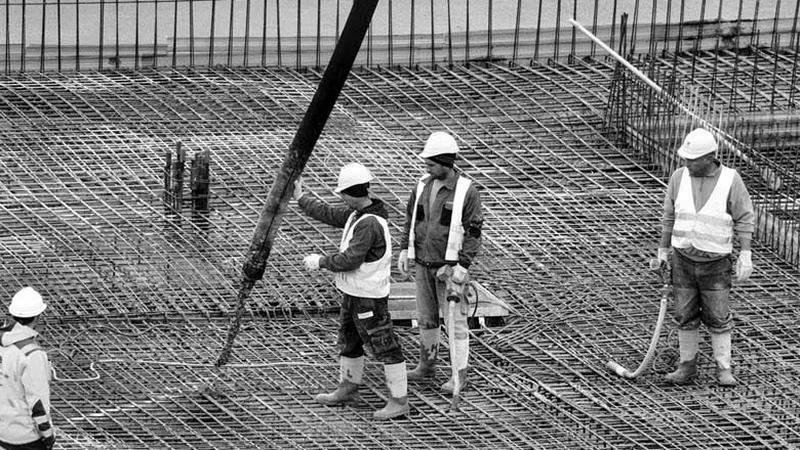
Wollongong's transformation from a coal and steel port into a modern coastal city has left a complex engineering legacy. The narrow Illawarra coastal plain, squeezed between the Tasman Sea and the steep Illawarra Escarpment, presents a patchwork of Quaternary alluvial deposits, residual soils from the Hawkesbury Sandstone, and colluvial fans at the base of Mount Keira. Designing shallow foundations here is rarely straightforward. Raft and mat foundation design often becomes the preferred solution when bearing capacity is marginal or settlement differentials are anticipated across a building footprint. Our laboratory team tests undisturbed samples under triaxial conditions and consolidates them in oedometer frames, feeding real stiffness parameters into the numerical models that govern slab geometry. We correlate field data from CPT testing with lab results to refine the modulus of subgrade reaction, reducing the guesswork that plagues overly conservative designs.
A well-designed raft foundation in Wollongong transforms a marginal site into a buildable one — the difference lies in the quality of the stiffness parameters fed into the model.
Quick answers
What does raft/mat foundation design typically cost in Wollongong?
The geotechnical investigation component supporting raft and mat foundation design in Wollongong ranges from AU$1,390 to AU$7,260, depending on the number of boreholes, sample depth, and the laboratory testing schedule. A typical single-dwelling site with two CPTs and a triaxial suite sits around AU$2,800. Multi-storey residential projects requiring consolidation tests and full settlement analysis across a larger grid will fall in the upper range.
When is a raft foundation preferred over strip footings in Wollongong?
We recommend raft and mat foundation design over isolated footings when the allowable bearing capacity drops below 100 kPa, which occurs often in the Quaternary alluvium near Lake Illawarra and along the coastal plain. Rafts also bridge localised soft spots, reduce differential settlement in variable profiles, and provide better seismic performance by tying the structure together during ground shaking on the region's Class M and Class E sites under AS 2870.
What soil parameters are critical for raft foundation design?
The key geotechnical inputs are the undrained shear strength profile for cohesive layers, the effective friction angle for drained analysis, the constrained modulus from oedometer tests, and the coefficient of subgrade reaction. For Wollongong's residual clayey sands derived from Hawkesbury Sandstone, we also measure suction and moisture variation with depth, as seasonal wetting and drying can alter the stiffness of the upper metre of the subgrade.
How does the Illawarra Escarpment affect raft foundation performance?
Properties near the escarpment base often sit on colluvial deposits with embedded boulders and variable matrix support. A rigid raft helps span these heterogeneities. We also assess slope creep potential, as slow downslope movement in the colluvium can impart lateral loads on the slab edge. Our investigation includes inclinometer installation triggers when the raft is within 50 metres of a mapped escarpment toe.