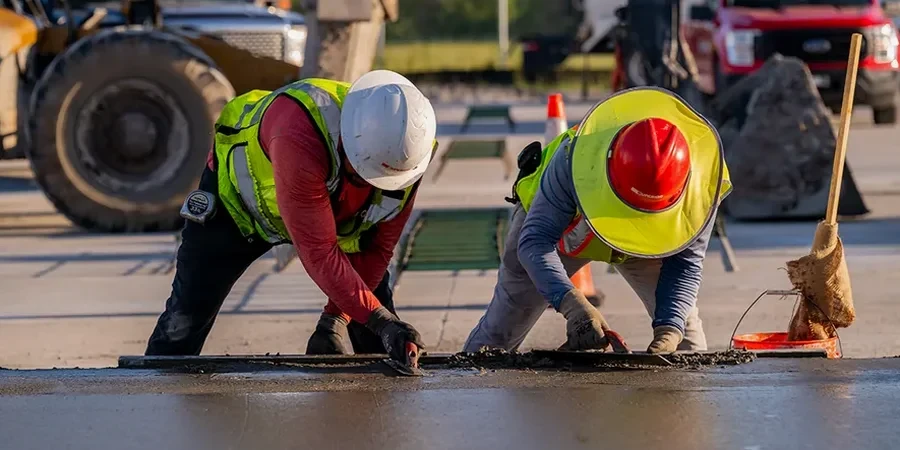
Salt-laden winds off the Tasman Sea and a history of coal mine subsidence shape every pavement project in Wollongong. Rigid pavement design here is not just about concrete strength. It demands a granular understanding of local geology, from the Hawkesbury Sandstone ridges to the coastal plain's soft alluvium. Our team tackles this directly. We specify slab thickness, reinforcement, and jointing based on in-situ ground data, not desktop assumptions. Whether the site sits on Bulli Clay or compacted fill near the escarpment, the pavement structure must resist curling, pumping, and long-term erosion beneath the slab. A CPT test often reveals soft lenses that standard boreholes miss, and we integrate those findings into the structural model before a single cubic metre of concrete is poured.
A concrete slab is only as good as the subgrade it rests on—skip the ground investigation and you inherit a maintenance liability for decades.
Quick answers
What is the typical cost for a rigid pavement design in Wollongong?
Fees for a full design package, including geotechnical investigation, structural analysis, and construction drawings, range from AU$2,920 to AU$10,600. The final figure depends on the slab area, the number of load cases, and whether we need to coordinate with existing underground services.
How long does the design process take?
A standard industrial slab design takes two to three weeks from the completion of field testing. More complex projects with phased construction or heavy dynamic loads may require four to five weeks.
Do you need to test the ground before starting the design?
Yes, absolutely. We must know the soil profile to a depth of at least two metres below the proposed subgrade level. Plate load tests and laboratory classification tests are essential inputs for the Westergaard model.
Can you design pavements for automatic guided vehicles (AGVs) and narrow-aisle trucks?
Yes. AGVs impose very tight flatness and levelness tolerances, often FF50/FL35 or better. We specify laser-guided screeding and joint detailing that prevents differential movement at the wheel paths.