← Home · Ground improvement

Stone Column Design for Coastal Ground Improvement in Wollongong

Together, we solve the challenges of tomorrow.

LEARN MORE →

The Illawarra escarpment catches moisture rolling off the Tasman Sea, and that constant humidity feeds straight into Wollongong's notorious reactive clays. We routinely see foundation pads here undermined by colluvial silts and loose estuarine deposits, especially east of the Princes Highway. Stone column design cuts through that soft profile and transfers load to competent material without the need for deep piling. In our lab, we pair the design with a CPT test to map the exact depth of refusal, because the interface between Wianamatta Shale and the overlying alluvium shifts unpredictably across the suburb. That on-ground calibration means we specify column diameter, spacing and aggregate gradation with real numbers, not textbook assumptions.

A stone column is only as reliable as the grain size curve of the in-situ soil it displaces.

How we work

Wollongong sits at roughly 34 degrees south, with a population exceeding 200,000 across its northern suburbs and the Port Kembla industrial corridor. Much of that growth sits on Quaternary sediments that compress under as little as 50 kPa. Our stone column approach tackles that head-on. We use a vibro-replacement method where the poker penetrates to the design depth, and graded stone is fed in lifts while the column is compacted from the toe up. Load testing on a recent Cringila project showed settlement dropping from 45 mm to under 8 mm after treatment. The design parameters depend heavily on the fines content of the native soil, so we always run a grain size analysis on samples taken at the target depth. Column spacing rarely exceeds 2.5 m centre-to-centre in the silty profiles common around Lake Illawarra.
Stone Column Design for Coastal Ground Improvement in Wollongong
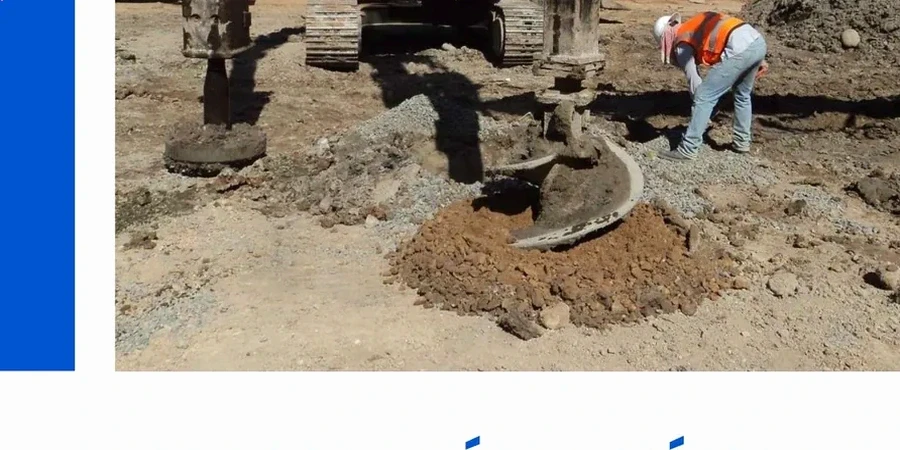
Technical reference image — Wollongong

Site-specific factors

The soil profile between North Wollongong and Port Kembla changes radically within a few hundred metres. North Beach sits on reasonably dense residual sands that drain well. Drive five minutes south toward the steelworks and you hit reclaimed fill with slag, ash and uncompacted dredge material. That contrast catches out engineers who assume uniform ground. We identify the hazard early by running borehole permeability tests and checking for organic content. A stone column in clean sand performs beautifully. The same column in organic silt can neck during installation or fail to densify the surrounding matrix. The fix is often a tighter grid with a sacrificial casing through the worst layer, but you only know that if the site investigation includes the right in-situ tests before the rig arrives.

Need a geotechnical assessment?

Reply within 24h.

Email: [email protected]

Reference parameters

ParameterTypical value
Typical column diameter600 – 900 mm
Maximum treatment depth15 m (vibroflot dependent)
Area replacement ratio10 – 35 %
Aggregate size (clean stone)25 – 75 mm
Post-treatment settlement< 15 mm (typical)
Applicable soil typeSilts, loose sands, soft clays

Associated technical services

01

Pre-treatment CPT profiling

We run continuous cone penetration tests to pinpoint the soft layers and confirm refusal depth before the stone column rig mobilises.

02

Aggregate specification and testing

Clean, durable stone is critical. We test aggregate crushability, grading and Los Angeles abrasion in our Unanderra-based lab.

03

Load test verification

Zone load tests on single columns and column groups verify that the design settlement criteria are met under 150% of the working load.

04

Post-installation density checks

We use CPT or SPT re-drilling between columns to confirm that the vibro-replacement has densified the surrounding soil to the target specification.

Applicable standards

AS 1726:2017 – Geotechnical site investigations, AS 4678:2002 – Earth-retaining structures (relevant for column-reinforced ground), AS/NZS 1170 series – Structural design actions (wind, earthquake)

Quick answers

What does stone column design cost for a typical Wollongong residential block?

For a standard residential lot in suburbs like Figtree or Corrimal, stone column design and verification testing usually falls between AU$2,370 and AU$8,090. The spread depends on the number of columns, depth to refusal and whether you need additional laboratory testing like Atterberg limits or grain size distribution on the site soils.

How do you confirm the columns are working after installation?

We run a zone load test on at least one column per site, loading it to 150% of the design working load and measuring settlement in real time. We also re-drive a CPT or SPT borehole between columns to check that the soil has densified. The acceptance criterion is typically a relative density above 70% in the treated zone.

Can stone columns work in Wollongong's reactive clay areas?

Stone columns perform best in soils that can drain and densify under vibration. In highly reactive, saturated clays the technique has limits because the clay cannot be compacted by vibration alone. In those cases we often combine a wider grid of columns with a load transfer platform or look at rigid inclusions, but that decision hinges on the Atterberg limits and undrained shear strength data from the initial investigation.
Location and service area

We serve projects in Wollongong and surrounding areas.

View larger map