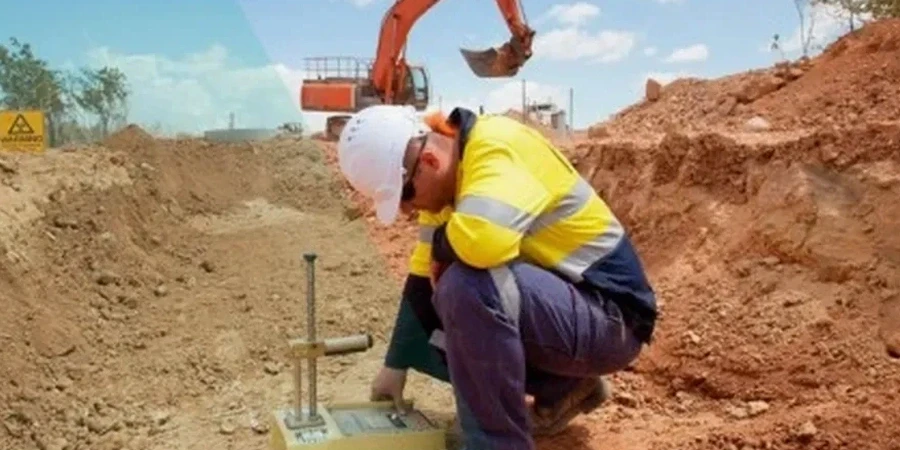
Wollongong sits on a complex geological edge. The Illawarra Escarpment rises sharply from a narrow coastal plain built on Quaternary alluvium and residual soils. Seismic hazard here is not uniform. A site in Figtree reacts differently than one in Port Kembla. Ground motion amplification varies with depth to bedrock and soil stiffness. Our seismic microzonation work maps these differences block by block. We define spectral accelerations for each soil profile. This feeds directly into structural design. AS 1170.4 demands site-specific hazard assessment when soil class is uncertain. A regional CPT test campaign gives us the continuous stratigraphy we need. We then model shear wave propagation. The output is a practical map. Engineers use it to set design ground motions. No guesswork involved. Just measured data and verified models.
Amplification factors can triple across a single Wollongong site when bedrock depth changes by 15 metres.
Quick answers
When does the NCC require seismic microzonation instead of a generic site class?
AS 1170.4 allows generic site classes for regular structures on well-known soil profiles. Once you encounter soft clays, deep fills, or highly variable rock depth, a site-specific study becomes necessary. Our microzonation approach gives you defensible spectral accelerations rather than conservative upper-bound values.
What is the typical cost range for a seismic microzonation study in Wollongong?
Cost depends on site size, number of measurement points, and whether lab dynamic testing is needed. Typical studies in the Illawarra range from AU$5,670 for a small single-pad assessment to AU$26,840 for a multi-hectare industrial development with full 2D response modeling.
What field data do you need to build the Vs model?
We rely on shear wave velocity profiles. MASW arrays and downhole seismic are our primary tools. In soft soil, seismic CPT gives continuous Vs data. Borehole logs calibrate the geophysical layers. The combination reduces uncertainty in the velocity model.
How long does a microzonation study take from field work to final map?
Fieldwork typically takes one to two weeks depending on array size. Lab dynamic testing on select samples adds two to three weeks. Ground motion modeling and reporting require another two weeks. A full study delivers in five to seven weeks from mobilization.
Can you provide spectrum-matched accelerograms for time history analysis?
Yes. We select seed records from global strong-motion databases based on the deaggregated magnitude-distance scenarios. Records are spectrally matched to the target uniform hazard spectrum using wavelet-based algorithms. We deliver the matched acceleration time series in formats compatible with ETABS, SAP2000, and OpenSees.